
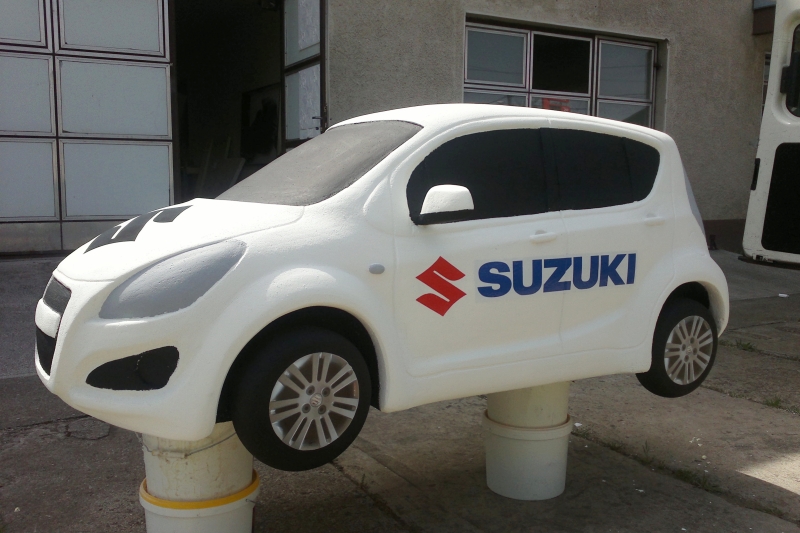
Getting the size and finish right on a polystyrene prop is an engineering decision, and it happens before any foam is cut. How far away the audience will stand and how much handling the piece will face drive the specification. Polystyrene props and signage cutting is precise enough to deliver almost any shape, so the mistakes that cost money are specification mistakes.
Let viewing distance set the size
A sign read across an exhibition hall needs letterforms that hold their shape at that range, and fine detail adds cost without being seen. The closer the audience stands, the more visible every tool mark and bead of foam becomes, so proximity raises the standard for cutting and finishing. Fix the viewing distance first, because it sets the letter height, the depth of the piece and the level of surface refinement worth paying for.
Overall size is also limited by the route into the venue, because a prop that can’t pass the access doors becomes a problem on delivery day. Large pieces are normally designed as sections that join on site, with seams placed where the design can hide them. Pieces viewed from the side need their edges finished to the same standard as the face. Confirming door widths, elevator capacity and ceiling height with the venue before production prevents expensive redesigns.
Match foam density to handling and detail
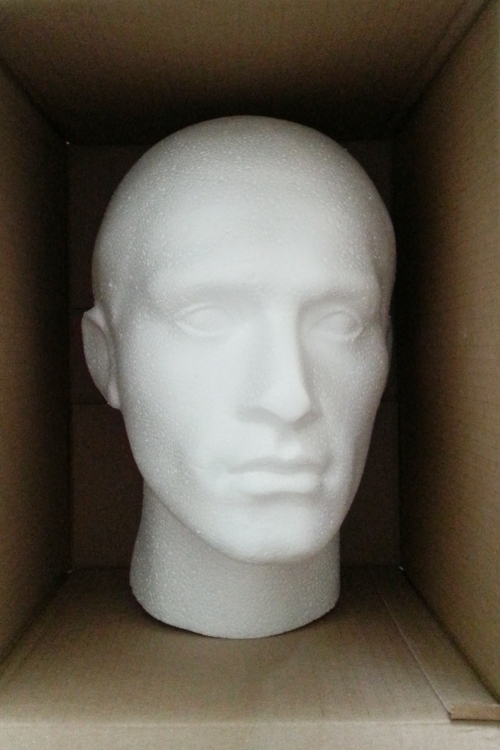
Expanded polystyrene is sold in grades from standard density up to ultra-high-density, and the grade sets the weight and working strength of the finished piece. Higher-density foam cuts with crisper edges and resists the dents that come from transport, installation crews and public contact. Lower-density blocks are lighter and cheaper to machine, which suits large simple forms that hang overhead or sit behind a barrier.
Where a design calls for sharp small detail or an especially smooth face, extruded polystyrene is the usual recommendation because its tighter cell structure holds fine features. A fabricator will often suggest standard EPS for the bulk of a form, with denser material only where hands or detail demand it. Asking for the available grades at quotation stage keeps the choice open until the budget is known. Density is ultimately about how much contact the piece will survive.
Choose a cutting method that fits the design file
Every job begins as a digital model: a vector outline for flat lettering, or a full 3D CAD file for sculpted forms. A specialist in CNC Polystyrene machining can advise which file formats the design requires, so ask before sending anything. Agree the final dimensions in writing at the same time. The file then narrows down which cutting technology suits the job.
Hotwire cutting draws a heated wire through the block to produce clean two-dimensional profiles, so it suits large letters, logos and architectural moldings at a low cost per piece. It’s fast and accurate on anything with a consistent cross-section. For simple signage in quantity, it’s usually the economical choice.
Sculpted organic shapes need a different approach, because a wire can’t carve undercuts or rounded detail on every face. Multi-axis CNC milling uses a rotating cutter on four or five axes to carve the block accurately from all sides. That precision keeps separately cut sections aligned when they’re joined during installation.
Specify the finish for the environment
Paint chemistry is the first constraint, because many solvent-based paints and adhesives can damage untreated polystyrene on contact. Water-based acrylic paint is generally safer on raw foam, though suitability varies by product. Ask the fabricator which coatings and adhesives are compatible with the foam specified, and approve a coated sample before full production to settle texture and sheen.
Outdoor installations and busy retail floors call for a sprayed polyurea or polyurethane hard-coat, which forms a tough plastic shell over the foam. The shell resists weather and impact, and it gives painters a stable surface that holds color evenly. For flat-faced lettering with a high-gloss front, a rigid acrylic facing bonded to the foam gives a finish that paint alone won’t match.
Coordinate handling and installation early
Polystyrene is light for its size, but finished pieces are bulky and their painted surfaces mark easily, so handling needs planning before delivery day. Confirm who positions the piece on site and which fixing methods the venue permits. Foam-safe adhesives and mechanical fixings should be agreed with the fabricator in advance, because the wrong adhesive damages the surface the same way a solvent paint does. Pieces that tour between venues should be specified for repeated assembly, with fixings that can be undone and remade.
A useful brief for a fabricator includes the viewing distance, the venue’s access dimensions, the expected life of the piece and the finish standard required. With those settled, the choices of density, cutting method and coating follow in order, and the prop arrives ready to install. Send those details with the artwork, and the job can be priced accurately the first time.


